Where to Position Construction Site Surveillance Cameras: A Placement Guide That Actually Prevents Theft
Two identical camera systems on two identical jobsites can produce completely different results, and the difference is almost always placement. Construction site surveillance cameras positioned well deter theft before it starts; positioned badly, they produce footage of hooded figures walking out of frame with your generator. This guide covers the placement decisions that determine which outcome you get — where the unit goes, what it must see, and how to keep sight lines honest as the project evolves.
Start With How Thieves Actually Enter
Site theft follows access, and access is predictable. The overwhelming pattern is vehicles: a truck backs through or near the gate, loads for a few minutes, and leaves. That makes the gate and any drivable approach your first coverage priority — not the middle of the site, not the office trailer, but the choke points a loaded vehicle must pass. Walk the perimeter and note every place a pickup could reach the fence line; each one is a candidate camera angle. Research backs the vehicle-first logic: the largest systematic review of surveillance studies found cameras produce their biggest, most consistent crime reductions in car parks — open areas where vehicles and valuables sit unattended, which is precisely what a jobsite becomes after dark.
Elevation Is the Cheapest Coverage Multiplier
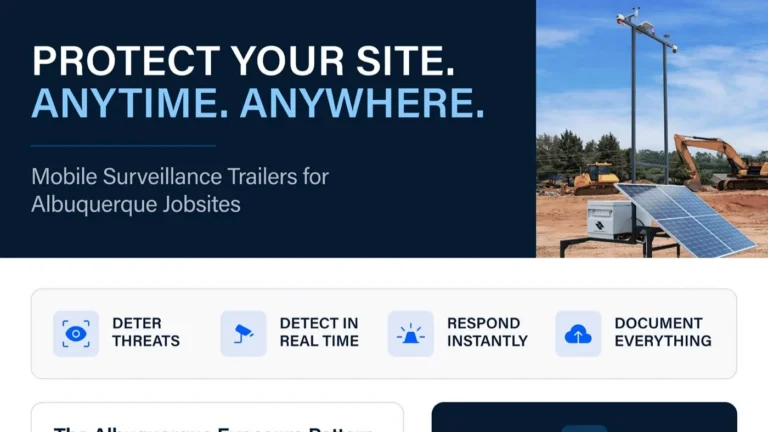
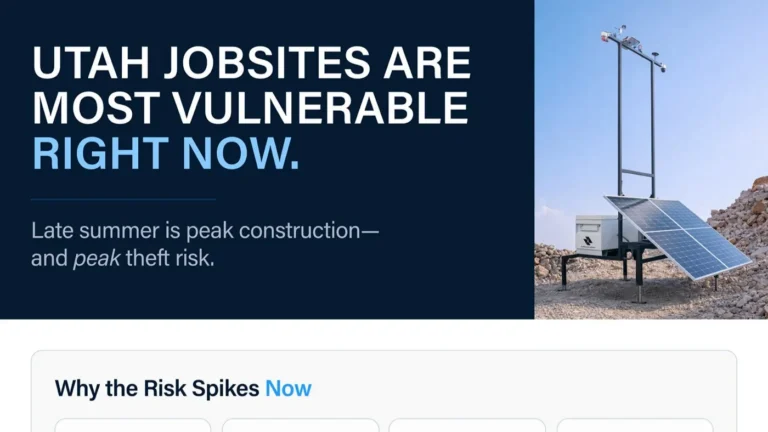
A camera at fence height sees a fence. A camera at 20-plus feet sees the site. Elevation is why trailer-mounted systems outperform pole-strapped consumer cameras: a mobile surveillance trailer raises 4K fixed and PTZ cameras on a telescoping mast, letting one position watch an area the size of a football field, see over stacked materials and parked equipment, and track a subject across the site with 360-degree rotation instead of losing them at the edge of a fixed frame. When you evaluate any camera location, think in sight lines from the mast head, not from eye level — the view changes completely.
The Four Zones Every Site Should Cover
Priority one, as above, is the gate and vehicle approaches — capture every entry and exit, ideally with enough resolution to identify vehicles and read details in daylight and at night. Priority two is high-value staging: fuel tanks, the tool conex, copper and wire storage, and wherever attachments and small equipment cluster. These are what walk away most often. Priority three is the site office and any secured storage containing plans, computers, and keys. Priority four is the open laydown yard, which elevation usually covers for free once the first three are handled.
With AI-based detection, each zone can carry its own rules: the gate alerts on any vehicle after hours, the fuel tank alerts on any person at any time the site is closed, and the public sidewalk outside the fence alerts on nothing at all. Zone logic is what keeps alerts rare and real — the details of how detection and zones interact live on SunRoad’s AI security camera feature page.
Make the Deterrent Visible, Not Hidden
Home security logic says hide the camera; jobsite logic says the opposite. Deterrence works when the unit is seen early, so position the mast where it’s visible from the most likely approach and let the floodlights, siren, and flashing alarm lights advertise that the site responds. An offender deciding between two targets picks the one without a lit, reactive mast at the gate — which is exactly the outcome you’re paying for. Complete coverage matters less than conspicuous coverage of the entry points; a thief who never comes onto the site never tests your blind spots.
Placement and Lighting Work as a Pair
Placement decisions should account for light, because deterrence research consistently finds cameras paired with lighting outperform cameras alone. Position the unit so its motion-triggered floodlights actually reach the zones that matter — a floodlight that illuminates the laydown yard while the theft happens at the gate is theater. The practical test: stand at each high-value zone at night and confirm that a triggered response would light you up and put you on camera simultaneously. If a corner of the site fails that test and can’t be reached by repositioning, that corner is where the second unit goes — or where the high-value storage moves.
Re-Walk Placement as the Site Changes
The placement that’s right at groundbreaking is wrong by drywall. Material deliveries create new visual obstructions, completed structures block old sight lines, and the high-value zone migrates from heavy equipment to installed fixtures — copper, appliances, HVAC — as the build progresses. Put a recurring reminder on the schedule: once a month, pull up the live view and confirm the unit still sees the gate, the current staging area, and the current high-value inventory. Repositioning a trailer takes minutes; discovering a blind spot after a theft takes a police report.
Placement Help Is Part of the Service
You don’t have to solve any of this from a blog post. SunRoad’s construction site surveillance cameras come with delivery, a roughly 30-minute setup, and placement guidance based on your actual site layout — and pricing starts at $799 per month with no long-term contract, so coverage can start this week. Schedule a demo and get a placement plan for your site before the next long weekend.
Frequently Asked Questions
Where should surveillance cameras be placed on a construction site?
Cover the gate and every drivable approach first, then high-value staging like fuel tanks and tool storage, then the site office, then the open laydown area. Elevated, mast-mounted cameras cover multiple zones from one position, and visible placement at entry points maximizes deterrence.
How many cameras does a construction site need?
Fewer than most people expect if they’re elevated. A single trailer-mounted unit with fixed and 360-degree PTZ cameras on a tall mast can cover an area roughly the size of a football field. Large or irregular sites typically add a second unit or reposition as phases change.
Should construction site cameras be hidden or visible?
Visible. On jobsites, the goal is deterrence, not surprise — a conspicuous mast with floodlights, a siren, and alarm lights convinces most offenders to pick a different target entirely, which beats recording a theft you then have to absorb. Rental pricing starts at $799 per month.
Ready to protect your site? Schedule a demo with SunRoad Surveillance today.
→ Schedule your free demo: sunroadsurveillance.com/schedule-a-demo/
Related Content